
Many Clovis homes are on a slab, but plenty of older homes in Clovis, Portales and Logan sit over a crawlspace. That space holds your plumbing, part of your wiring and the structure that carries the floor. When moisture gets in, the damage is slow and quiet.
Signs you can notice from inside the house
- A musty or earthy smell, especially when the heat or cooling first comes on
- Floors that feel soft, bouncy or uneven
- Gaps opening at baseboards or doors that start to stick
- Higher humidity indoors than you'd expect in a dry climate
- Insects that like damp places, such as silverfish and pill bugs
None of these proves there's a moisture problem, but any of them is a good reason to look.
What to look for at the hatch
If you can safely open the access hatch and look in with a flashlight, check for:
- Standing water or mud
- Dark staining on framing or the foundation walls
- Insulation that's sagging, wet or has fallen down
- Fungal growth on wood
- Drips from plumbing or condensation on ducts and pipes
- White, chalky deposits on the foundation, a sign water has moved through it
Please don't crawl into a space that's tight, wet or has exposed wiring. That's what the inspection is for.
How I check it during an inspection
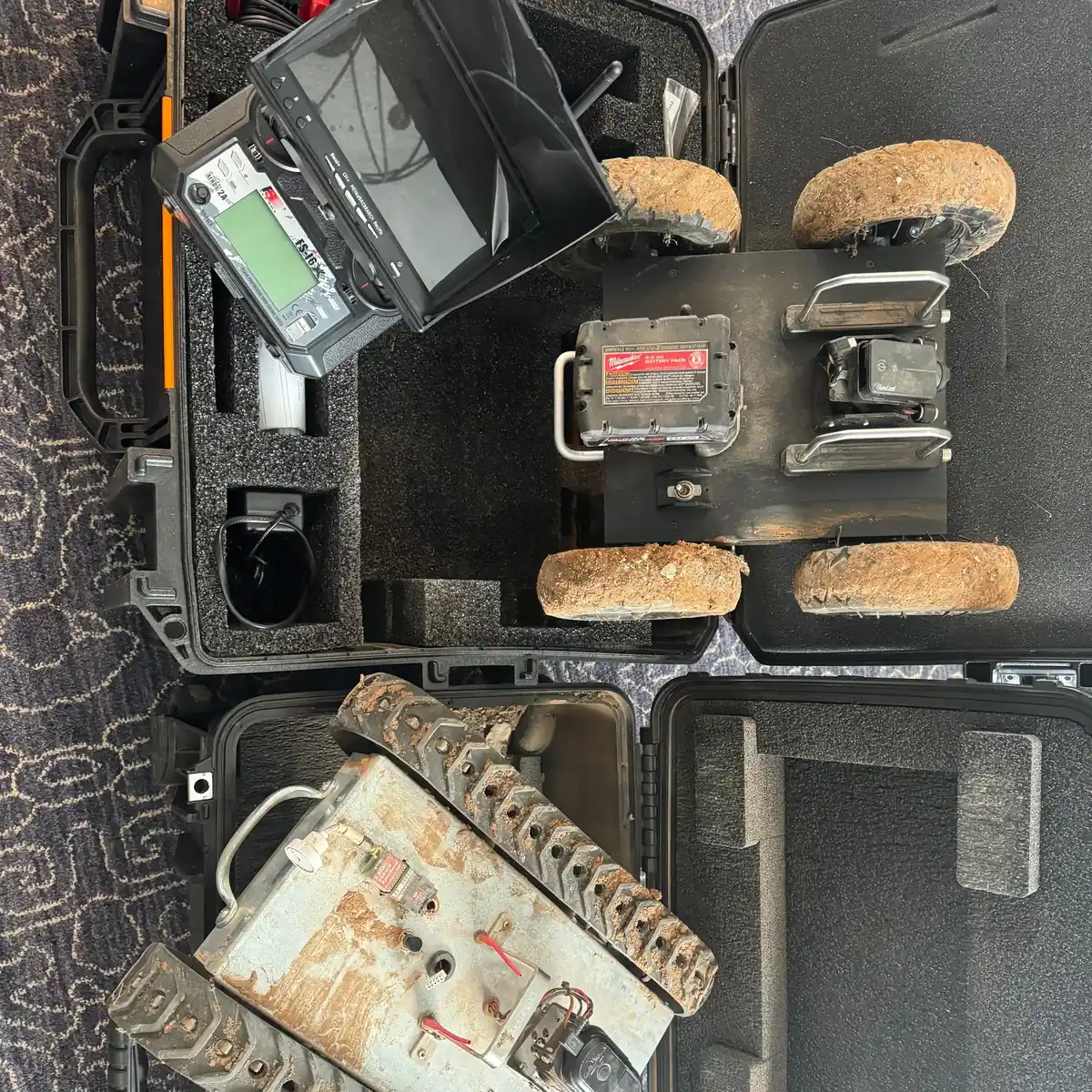
Where the crawlspace is safe and roomy enough, I go in myself. Many here are too low or too hazardous to enter. Instead of marking those "not inspected," I send in a camera crawler with lights and a high-definition camera. It drives into low, damp spaces and sends back live video and photos that go in your report.
I use a moisture meter on framing and subfloor where I can reach it, and thermal imaging from inside the house to spot cold, damp patterns in floors and walls. Moisture readings matter more than appearance. Old stains can be dry, and wood that looks fine can be wet.
Where the water usually comes from
- Plumbing leaks. Supply and drain lines run through the crawlspace, and a slow leak can go unnoticed for years.
- Drainage outside. On a flat lot with no gutters, rain soaks in next to the foundation and finds its way under the house.
- Disconnected ducts and drain lines. A loose condensate line or duct can add moisture where you'd never see it.
- Evaporative coolers. A leaking cooler line can feed water into the walls and down to the crawlspace.
What to do about it
Fix the source first. Repair leaks, reconnect ducts and drains, and move water away from the foundation with gutters, downspout extensions and grading. Then let the space dry and have damaged framing or insulation evaluated. If there's a musty smell or visible growth, air sampling can tell you what you're breathing.
The crawlspace drone is included in the Complete and Total Confidence packages whenever the home has an accessible crawlspace. Keep the access hatch clear so it can be reached. Reports are delivered within 24 hours, typically the same day.