
A sewer line can pass every test inside the house and still have roots, an offset joint or a low spot holding water underground. The toilets flush and the tubs drain, so nobody suspects anything until the line backs up. A sewer scope is how you find out what's going on in that pipe before you own it.
Here's what one looks like from start to finish, using a typical example.
A sewer scope from start to finish
Picture a buyer under contract on an older home in Clovis. Every fixture drains, there's no sign of a backup, and the home inspection finds no active plumbing leak. But the house is old enough that the original clay or cast iron sewer line may still be in service, so the buyer adds a sewer scope.
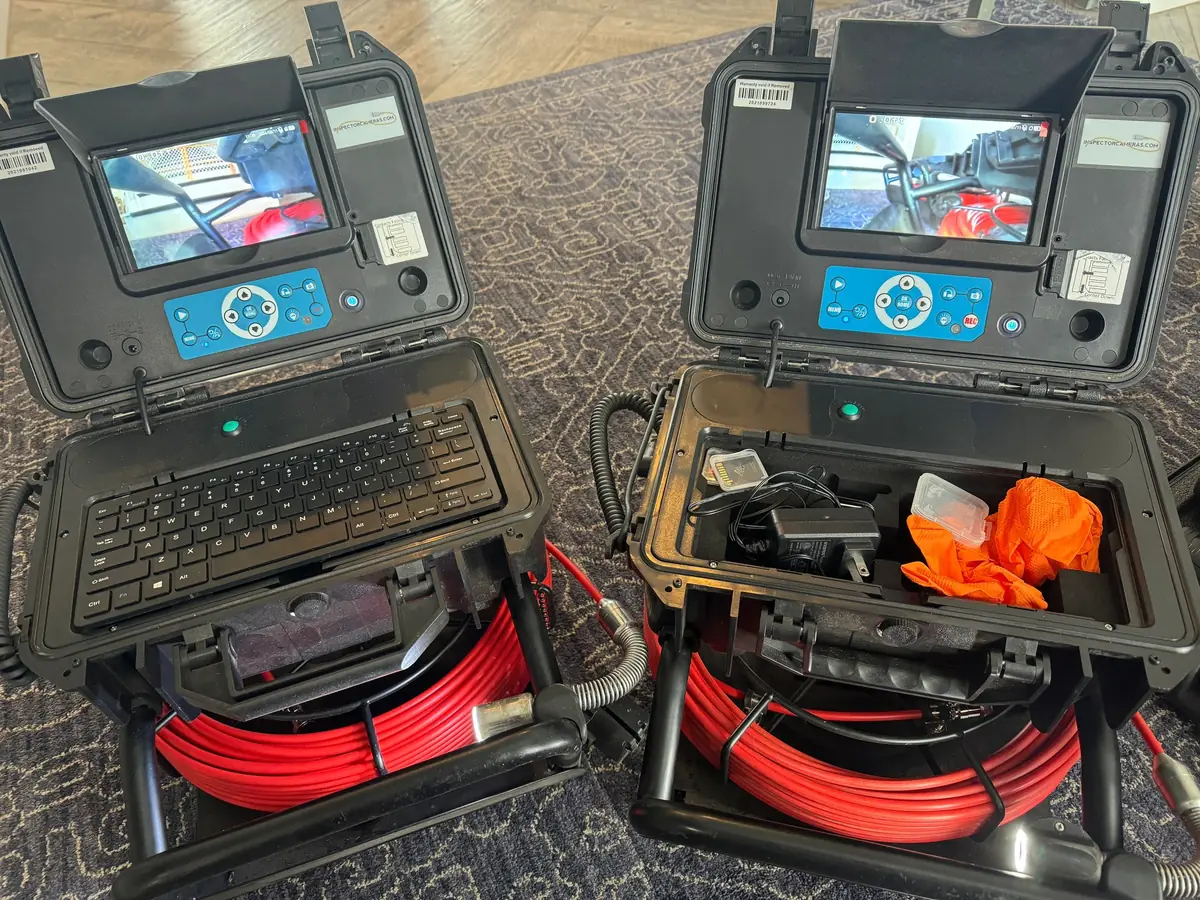
I find an accessible cleanout and feed a high-resolution camera on a flexible rod into the line. The camera carries its own light, and I watch the inside of the pipe in real time as it travels toward the city main or the septic tank.
In this example the first stretch of pipe is clear. A little farther along, the camera shows fine roots coming in at a joint. Roots find the small gaps where pipe sections meet, and as they grow they catch paper and waste until the line starts to restrict.
Farther down, one section sits slightly out of line with the next. That's an offset. Waste still gets past, but the lip at the joint catches debris. Near the end of the run, water stays in the bottom of the pipe after the camera passes. That's usually a belly, a low spot where the pipe has settled and holds water and waste.
None of that means the buyer should walk away. It means the buyer now knows something that couldn't be seen from inside the house, and has time to have a plumber look at the roots, the offset and the belly and recommend a repair before the inspection period ends.
What the camera can show
- Cracks, breaks and collapsed sections
- Tree roots growing into joints
- Bellies, low spots where waste and water sit
- Separated or offset joints
- Corrosion and scale in cast iron
- Blockages and debris left from construction
- The pipe material, which tells you a lot about how much life is left
What a finding means depends on how bad it is and where it is. A few fine roots in an otherwise sound line may only need cleaning and a watchful eye. Roots filling the pipe, a break the camera can't get past or widespread deterioration needs a plumber's evaluation soon.
What a sewer scope doesn't do
A sewer scope reports what the camera can see on the day. It doesn't cover drain lines under the floor or inside the house, and it can't predict when a line will fail. I don't pull toilets to get access, mark the location of defects in the yard, measure the length of the line or estimate repair costs. If there's no accessible cleanout, the camera can't get past a blockage, or standing water hides part of the pipe, the report says so.
Why a drain test isn't enough
Running water at the sinks and flushing toilets is part of every home inspection, but it isn't the same as seeing the buried line. A partial blockage can let water through on inspection day and still back up under heavy use. That's especially true in a vacant house, where nobody has used the plumbing enough to reveal a slow drain.
In Clovis I see sewer problems at both ends of the age range. Homes built before 1980 often still have the original clay or cast iron line, and many are at or past the end of their service life, with separated joints, roots and corrosion. Homes built after 2005 show a different pattern: bellies, breaks and disconnected sections that come from how the pipe was installed, not its age. I recommend a scope on any home over 20 years old and suggest one on newer homes too.
Reading the findings without panic
Roots don't always mean replacement. Cleaning may restore flow, though roots usually come back if the gap that let them in is still there. An offset may be minor, or it may catch debris every few months. A belly may be one short section or part of wider settling. The right repair depends on the whole line and on a plumber's evaluation, which is why the report points you to a qualified plumbing contractor instead of guessing at a fix.
For buyers, timing is the point. Knowing about a problem during the inspection period gives you room to request a repair, ask for a credit or budget for the work. Finding it after you move in leaves you without those choices.
For sellers, a scope as part of a pre-listing inspection heads off a late surprise from the buyer's inspection. For homeowners with slow drains, gurgling toilets, sewer odors or a past backup, it's a straightforward way to find out why.
What you get
You get the video of your line along with the written findings: whether the line could be accessed, what the camera showed, what couldn't be seen and what follow-up I recommend. The video also gives your plumber a starting point.
I don't go over findings on site. Everything goes into the report, which arrives by the evening of the inspection or the next morning at the latest. Once you've read it, you're welcome to call me with questions.
How to add a sewer scope
The sewer scope is included in the Complete and Total Confidence packages, along with the full home inspection, thermal imaging and the crawlspace drone when the home has an accessible crawlspace. You can also choose just the services you need in the booking form. I serve Clovis, Portales and Logan, and travel within 30 miles of Clovis is included.