
Buyers often assume the home inspection covers the whole plumbing system. It covers a lot of it, but not the most expensive part to replace. Here's how the two compare.
What the home inspection covers
During a home inspection I check the plumbing that's visible and accessible:
- The water heater, its venting, relief valve and drain pan
- The main water shut-off and visible supply piping
- Fixtures and faucets: flow, drainage and leaks
- Visible drain, waste and vent piping under sinks, in the crawlspace and in the garage
- Gas piping where it's visible
- Signs of past or active leaks, with thermal imaging and a moisture meter to confirm
I run water at the fixtures and watch how the drains perform. That tells you a lot about the plumbing inside the house. It doesn't tell you what's going on in the pipe under the yard.
What a sewer scope covers
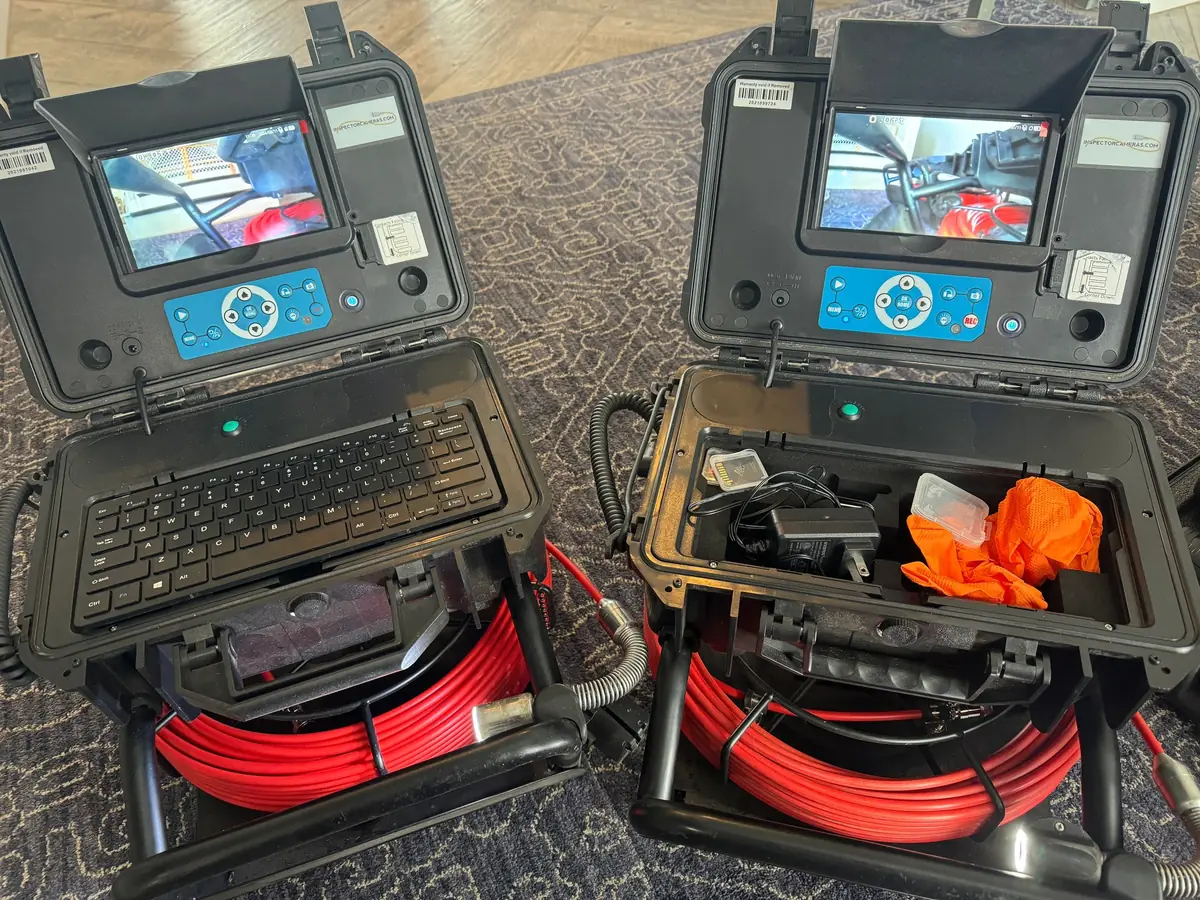
A sewer scope puts a high-resolution camera on a flexible rod through the sewer lateral, the buried pipe that runs from the house to the city main or septic tank. You see the inside of the pipe on video. I look for:
- Cracks, breaks and collapsed sections
- Tree roots growing into joints
- Bellies, low spots where waste and water sit
- Separated or offset joints
- Corrosion and scale in cast iron
- Debris left from construction
- The pipe material, which tells you how much life it likely has left
A line can have a serious problem and still drain fine during an inspection, especially in a house that's been empty. That's why running water isn't a substitute for a camera.
Why the difference matters in Clovis and Portales
A sewer replacement here runs $5,000 to $15,000, and homeowner's insurance doesn't cover it. I see problems at both ends of the age range. Homes built before 1980 often still have the original clay or cast iron line. Homes built after 2005 show bellies, breaks and disconnected sections from installation. I recommend a scope on any home over 20 years old and suggest one on newer homes too.
What neither one does
Neither a home inspection nor a sewer scope opens walls or digs up the yard. The scope doesn't cover drain lines under the floor or inside the house, and I don't mark defects in the yard, measure the line or estimate repair costs. If the camera finds a problem, a plumber can confirm the location and give you a repair price during your inspection period.
Getting both
The Complete package combines the home inspection with a sewer scope and the crawlspace drone, and costs less than booking the services separately. You get the video of your line along with the report, delivered within 24 hours, typically the same day.